
By Tray Brown | Due Process Institute | Policy Communications Associate
Background
On June 13th and June 14th, I had the pleasure of attending Clean Slate Initiative’s 2024 Convening in Philadelphia. Right off the bat, it was incredible to see a large venue filled with people from all across our country. Even though D.C. is considered the center of national politics, it doesn’t always capture the breadth of the criminal legal reform movement. I immediately met advocates from states like California, New York, North Carolina, Utah, Michigan, Ohio, Texas and Oregon just to name a few. At CSI’s Convening, you could feel the energy and power that was created from bringing together a wide array of advocates, organizations, and directly impacted individuals. For those not lucky enough to have attended, I wanted to highlight some of my favorite panels and conversations from this inspiring event.
The Reason Why
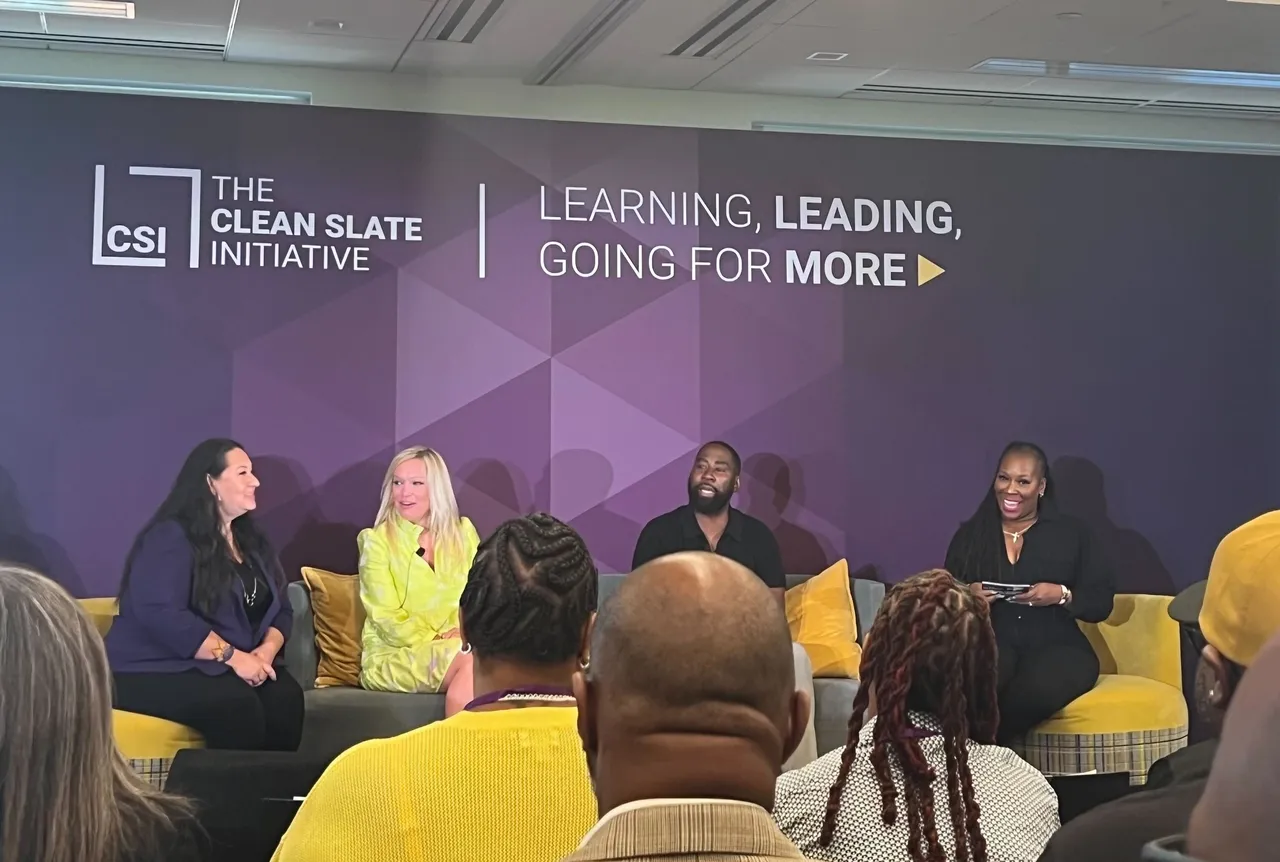
Pictured: Destiny Garcia, Executive Director of Clean Slate Utah; Chelsea Murphy, CSI Strategist; Zaki Smith, cinematographer and photographer; Dr. Topeka Sam, Founder of The Ladies of Hope Ministries
The first panel at the convening was a main stage discussion entitled “The Reason Why” as each panelist told their personal stories of how they were directly impacted by the criminal legal system. Destiny shared her experience of attempting to find employment with a criminal record while battling poverty with her daughter. Chelsea spoke about the shame of having to answer questions about her police report in a job interview. Zaki tearfully recalled the struggle he faced when he returned to Brooklyn after his incarceration. It was moving to hear and to see the experiences of directly impacted people front and center at an event like Clean Slate’s Convening.
Furthermore, while each story shared by the panelists was unique, each of them pointed to the same common theme: the often insurmountable barriers faced by returning citizens. Employment, housing, education, and so much more are all infinitely more difficult with a criminal record. With nearly 1 in 3 Americans having some type of criminal record, the panelists’ stories can resonate with so many people across the nation. Destiny, Chelsea, and Zaki all pointed to record sealing as the single most impactful thing that could have helped them as they reintegrated into their communities. This is why legislation like the Clean Slate Act is so necessary and urgent at both the federal and state level.
Momentum Building in the States
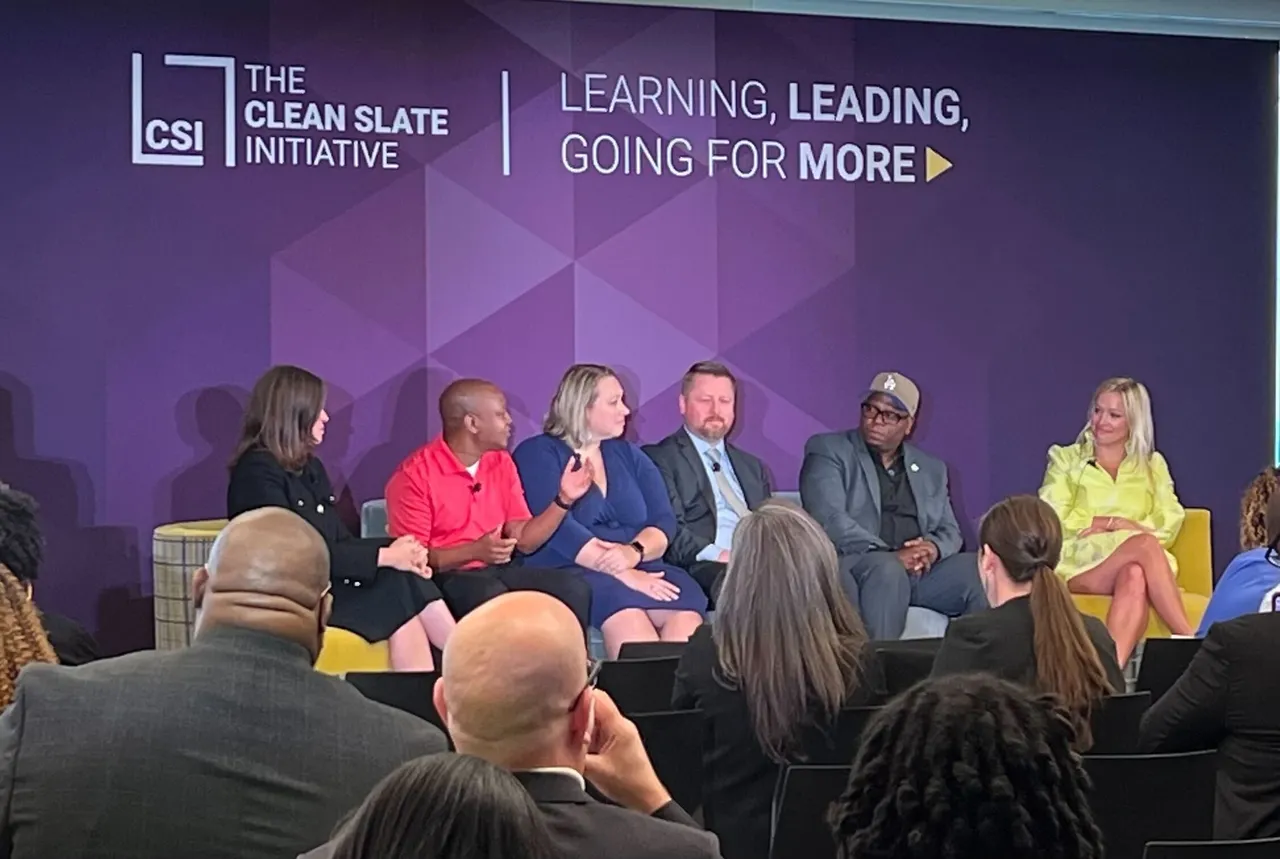
Pictured: Sarah Mae Jennings, Deputy Executive Director of the Texas Access to Justice Commission; Kungu Njuguna, Policy Strategies at ACLU of Kentucky; John Cooper, Executive Director of Safe & Just Michigan; Tony Grant, Co-Executive Director of Nation Outside; Chelsea Murphy, Clean Slate Initiative Campaign Strategist
Following the panel of directly impacted stories, there was a fantastic discussion on the movement in states to implement Clean Slate legislation and initiatives. The best example of this was the work led by John Cooper at Safe & Just Michigan, which helped get Clean Slate legislation passed in the state with bipartisan support in April 2021. Within 24 hours of the law going into effect, over 1 million Michiganders saw their criminal record expunged and nearly 40% had a fully cleared public record. Kentucky and Texas, represented on the panel by Kungu and Sarah, shared that their states are also moving in this direction. Kentucky has already introduced Senate Bill 218 and House Bill 569 and if passed, it would lead to record sealing of misdemeanors and some felonies starting in 2027. Meanwhile, the Texas House of Representatives continues to advance Clean Slate laws with strong bipartisan support but keeps being met with resistance from the State Senate. Even with this setback, some local counties in the state have begun to expand their own record sealing programs like Harris County. The Houston area county passed its record sealing program in 2022 but is now expanding it to include some felonies in 2024.
The success of Clean Slate in states like Michigan and the momentum being built by organizers in Kentucky and Texas affirms just how widespread the support for criminal legal reform is. Even though these three states are all vastly different in terms of politics and demographics, lawmakers and voters are increasingly receptive to the message that second chances matter.
1994 Crime Bill
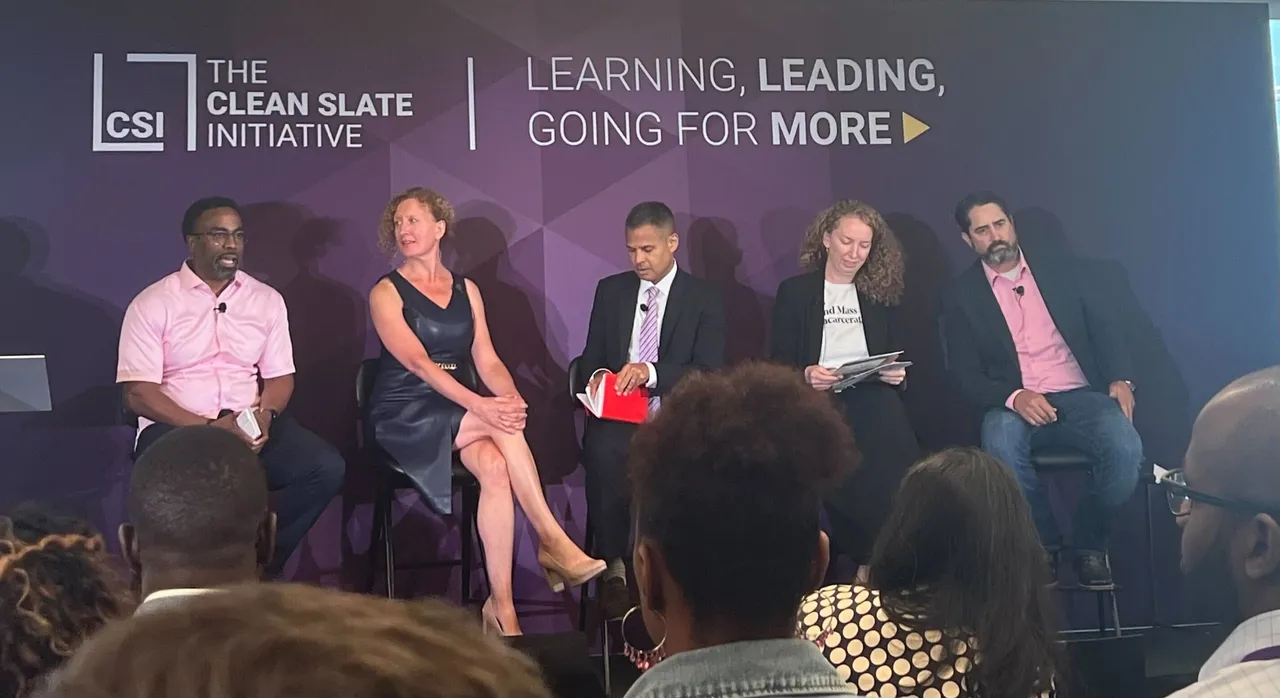
Pictured: Daryl Atkinson, Co-Founder and Co-Director of Forward Justice; Lenore Anderson, President of Alliance for Safety and Justice; Nicholas Turner, President of Vera Institute of Justice; Zoe Towns, Executive Director of Fwd.US; Brett Tolman, Executive Director of Right on Crime
The first day of the convening continued with a panel discussion on the 1994 crime bill and where we are today in relation to criminal legal reform. In large part due to the outstanding panelists, this was my favorite panel of the convening. The historical context in which the 1994 crime bill was passed—a strong public sentiment of uncontrollable crime—mimics so much of the post-pandemic crime narrative the criminal legal reform space is fighting so hard against. It was also a moving reminder of the importance of our work in this space. The panel did not mince words when they referred to the 1994 crime bill as the most disastrous “tough on crime” legislation ever passed. It accelerated the federal incarceration rate to its peak number, increased the racial disparities in federal prisons, and further codified punishment as our nation’s remedy to drug addiction.
On both a positive and a personal note, it was equally powerful to see the panel highlight the progress we have made on decarceration in my exact lifetime (almost: I was born in 1995). For example, the incarceration rate has declined almost every year since 2010 and black men are more likely to graduate college than to go to prison in 2024. But even with these positive trends, there is still so much work to do at the federal level. Congress must move on legislation like the Clean Slate Act, the Fresh Start Act, and the EQUAL Act in order to continue to rectify the longstanding impact of the 1994 crime bill.
The Power of Lobbying
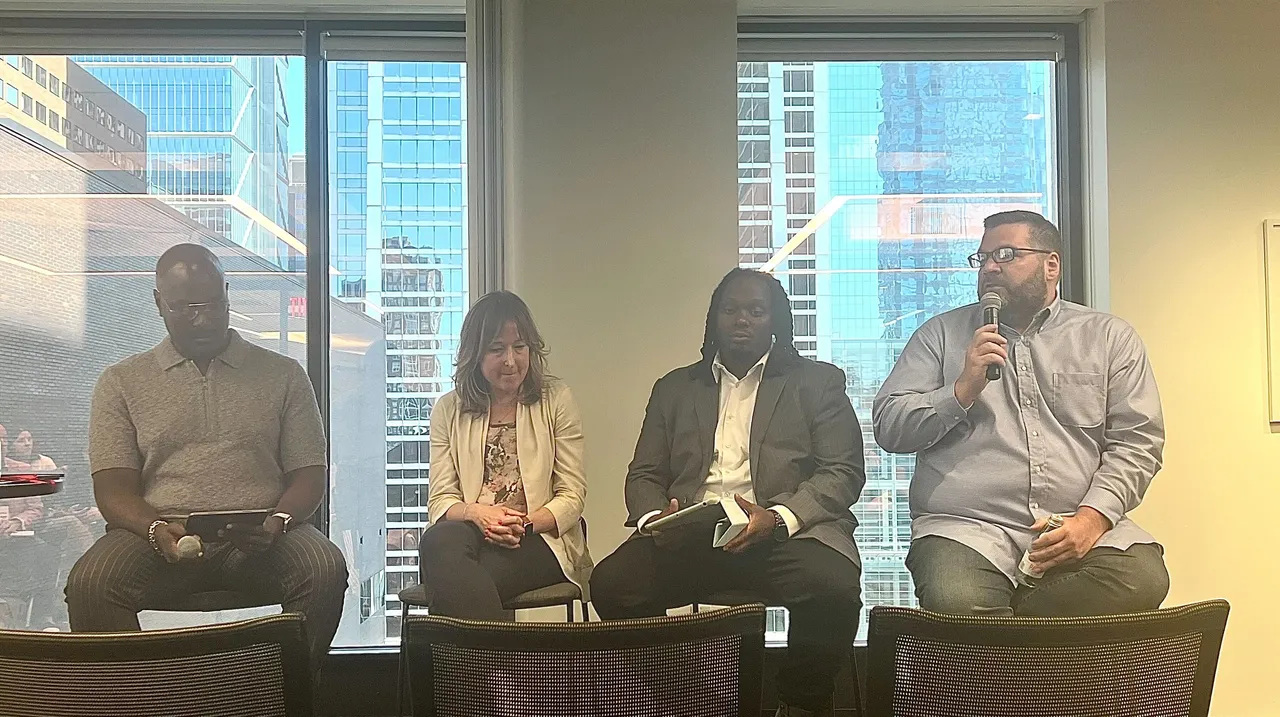
Pictured: Reginald Darby, Federal Legislative Director of CSI; Jolene Forman, Chief Program Office of the Just Trust; Antonio Lightfoot, Deputy Director of Workers Center for Racial Justice; Jason Pye, Vice President of Due Process Institute
To wrap up my time at Clean Slate’s Convening, I attended a panel with a much more familiar subject matter: leveraging lobbying power as a 501(c)3 and a 501(c)4 organization. I listened to Jolene, Antonio, Reginald, and my co-worker Jason speak about how to effectively communicate with state and federal representatives on Clean Slate and second chance issues. They each spoke about the importance of relationships, face-to-face meetings, and bringing people with lived experience into congressional offices. Most importantly, the panel spoke about restoring empathy into politics and into the discussions we have with lawmakers on these issues.
During this discussion, I thought about all of the information and experiences I’d learned about the previous 48 hours: centering directly impacted people and their experiences in our reform efforts; the terrific momentum in multiple states for Clean Slate legislation, and the communal harm of the 1994 crime bill. This centered and crystallized my thoughts on how I was going to bring everything I learned from CSI’s Convening into my day-to-day work: remain people focused and keep pushing ahead. Our communities deserve better.
The Clean Slate Initiative’s 2024 Convening was an incredible experience and opportunity to meet, see, and hear some of the leading voices in the criminal legal reform space. It can be difficult to remain upbeat when Congress is unreceptive to our calls to reform our broken legal system. But the platform created by the Clean Slate Initiative and the voices amplified at the convening were an inspiring reminder about the work we do at Due Process Institute and why we do it. I left Philadelphia feeling more optimistic and more motivated to continue pushing this legislative priority that will bring prosperity for not only those directly impacted, but for us all.