
By Jason Pye | Due Process Institute | Vice President
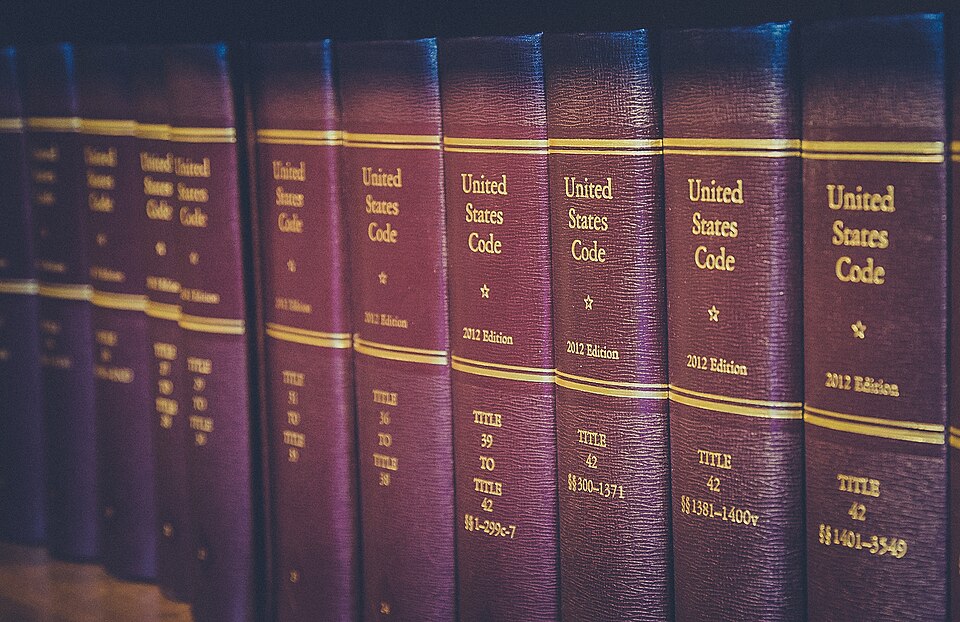
Federal criminal law is an enormous, opaque, and ever-expanding body of authority. It is scattered across titles of the U.S. Code, embedded in thousands of regulatory provisions, and usually created without meaningful thought or debate. Congress often creates new crimes in response to perceived societal problems. These frequent attempts at addressing social ills via punitive legislation result in the near constant growth of the number of federal criminal statutes and regulations, with few, if any, lawmakers stopping to ask whether they’re being too reactive, whether there are better alternatives to incarceration that would address the problem, or whether state legislatures, rather than Congress, should be the legislative body deciding if a new criminal law should be created.
To illustrate the bloat of the federal law, Congress cannot answer a basic institutional question: How many criminal offenses has it actually created? This is quite a concerning realization. The breadth of overcriminalization and overfederalization of our nation’s criminal law is so vast that Congress, let alone any ordinary person, doesn’t know how many federal criminal laws there are or what they cover. This is a very serious and a very real problem because it shapes real policy outcomes, erodes fair notice, and allows lawmakers to keep expanding criminal penalties without grappling with the cumulative effects of what they’ve already built.
Introduced by Reps. Chip Roy (R-TX) and Lucy McBath (D-GA), the Count the Crimes to Cut Act, H.R. 2159, aims to curb Congress from continuing to legislate in ignorance and aims to establish a foundational understanding of laws already passed. This bipartisan bill doesn’t repeal any criminal laws or tie the hands of prosecutors. The Count the Crimes to Cut Act simply requires the Department of Justice to identify and catalog the scope of existing federal criminal law so future decisions can be judged against a clear baseline.
This is not a controversial idea. Understanding the breadth and scope of federal laws is supported by both Democrats and Republicans, which is why the House passed the Count the Crimes to Cut Act by voice vote on December 1.
The Problem: A Fragmented, Incomprehensible Criminal “Code”
Modern federal criminal law isn’t built like a cohesive organized criminal code. It more resembles an archive of patchwork responses to the latest headline, crisis, or political imperative. Some crimes are in Title 18; others are tucked into titles on banking, health, or animal welfare, for example. Many more lurk in agency regulations where violations trigger criminal sanctions without Congress ever articulating the underlying offense. Unbelievably, no comprehensive inventory of federal criminal offenses exists. And no authoritative count has ever been produced. Congress simply doesn’t know the size of the authority it exercises. That ignorance has severe and significant consequences for Americans.
In the earliest days of the Republic, Congress passed the Crimes Act of 1790, which included 23 crimes. Virtually all the offenses in the Crimes Act were related to the crimes explicitly mentioned in the Constitution. It wasn’t until the 20th century that the number of federal crimes began to expand. Growth then exploded in the last few decades of the 20th century, with federal criminalization becoming the only answer to every societal challenge. It was around this time that the number of federal crimes became more guesswork than reality. A Department of Justice effort in the 1980s counted about 3,000 statutory offenses. Later efforts by academics, such as Professor John Baker, estimated more than 4,000 criminal statutes. Importantly, neither of these efforts attempted to include the number of offenses in federal regulations that could lead to someone’s incarceration.
Congressional concern about overcriminalization and the expansion of federal criminal law isn’t new, but past efforts to address the issue have unfortunately stalled. In 2013, the bipartisan Over-criminalization Task Force in the House Judiciary Committee, co-chaired by Reps. Jim Sensenbrenner (R-WI) and Bobby Scott (D-VA), undertook a serious examination of the issue. Over ten hearings, a bipartisan group of members explored the sprawling nature of federal offenses, weak mens rea standards, inconsistent prosecutorial enforcement, unnecessarily punitive sentencing schemes, and ever-increasing collateral consequences that are burdening the federal justice system. A diverse collection of witnesses from differing political ideologies and professional perspectives made clear that our federal criminal law was too expansive, too draconian, and poorly understood.
During the course of its work, the House Over-criminalization Task Force asked the Congressional Research Service (CRS) to provide the number of federal criminal statutes. In response to the request, Chairman Sensenbrenner explained, “CRS’ initial response to our request was that they lack the manpower and resources to accomplish this task.” The best estimate is that there are 5,000 federal criminal statutes and some 300,000 regulations that carry criminal penalties. Still, these are rough estimates at best.
The task force’s work ended once its authorization expired, and unfortunately, no permanent inventory was produced. No baseline reporting mechanism was institutionalized. The conversations ended, but the expansion did not. Rank-and-file lawmakers have continued to support adding criminal penalties to bills without considering whether those penalties are redundant, poorly drafted, or belong at the federal level at all.
What the Count the Crimes to Cut Act Would Accomplish
The text of the Count the Crimes to Cut Act has been around for a while. In fact, the language is more than a decade old. It was first included in the Smarter Sentencing Act of 2014. It has appeared in every subsequent iteration of that bill, introduced in every Congress since. The language also appears in the text of the 2015 and 2017 versions of the Sentencing Reform and Corrections Act, a precursor to the First Step Act of 2018. The standalone bill did not exist until Rep. Chip Roy (R-TX) first introduced the Count the Crimes to Cut Act in June 2020.
The Count the Crimes to Cut Act doesn’t seek headlines, nor does it promise reform. It does something quiet but durable: it requires the Attorney General to report to the Judiciary Committees on every federal statutory criminal offense and regulatory offense. For each offense, the report must include:
- The statutory source
- The elements of the offense
- The potential criminal penalties
- The mens rea requirement, or lack thereof, of each element of the criminal offense; and
- The number of prosecutions for the offense in the past 15 years
This is an essential inventory. Without it, Congress continues to expand criminal sanctions in a vacuum. With it, lawmakers will finally have something to push back against when the next “crime of the day” proposal arrives.
The Count the Crimes to Cut Act will allow Congress to better understand federal criminal laws already on the books. During the debate on the bill in the House in December, Roy explained, “Previous Congresses have decided to criminalize some action that today we might take a second look at….Maybe some of these should be sunsetted. Maybe some should be aligned. Maybe there are penalties that are out of whack. Maybe there are things that should be done to have greater notice for the American people.”
Understanding the Scope of Overcriminalization and Overfederalization
Why is this bill necessary in the first place? Because Congress has abdicated part of its core function of defining criminal law deliberately, transparently, and in a limited fashion. Instead, criminal law has become a tool of political reactivity. Rather than establishing a coherent federal criminal code, lawmakers have responded to publicized events by adding new offenses that often duplicate existing authority or delegate vast authority to agencies.
Without a central repository of offenses, Congress cannot see whether the federal government is criminalizing conduct that states already handle effectively, whether penalties are proportionate to federal interests, or if there is duplication in federal law. Additionally, debates about enforcement, fairness, or sentencing reform all presuppose an underlying body of law. When that body is unknown, debates are untethered from the actual legal landscape. This dynamic doesn’t serve the rule of law and is fundamentally unfair to those accused of violating criminal laws.
Structural reform shouldn’t begin with sweeping repeal; it should begin with information. Once Congress reckons with how many criminal statutes it has created—and how many regulatory provisions carry criminal penalties—three things will happen: First, lawmakers will gain important context for future choices. Second, redundancies in federal criminal laws will become harder to ignore. Third, the assumption that federal criminal law should always expand becomes harder to justify.
The Count the Crimes to Cut Act is not a panacea. No one says otherwise. However, refusing to count is the surest way to ensure overcriminalization remains invisible and unchallengeable. At its heart, the Count the Crimes to Cut Act is an appeal to institutional humility. It doesn’t presume nefarious intent, but it recognizes that lawmaking without measurement is legislation without insight.
If Congress is ever going to reclaim responsible criminal lawmaking, it must start by knowing what it already has. That begins with gathering the data–a foundational act of comprehension on which all good policy depends.