
Menu
Close
Due Process Institute supports reforms to prevent judges from increasing sentences based on conduct a jury has already rejected through an acquittal. Ending this practice reinforces the role of juries, strengthens due process, and helps ensure sentencing is based only on proven criminal conduct.
Learn about Due Process Institute’s policy work to address acquitted conduct sentencing.
Discover how Due Process Institute advocates in the courts to fight to end acquitted conduct sentencing.
Interested in learning about what acquitted conduct sentencing is and why “juries decide” matters?
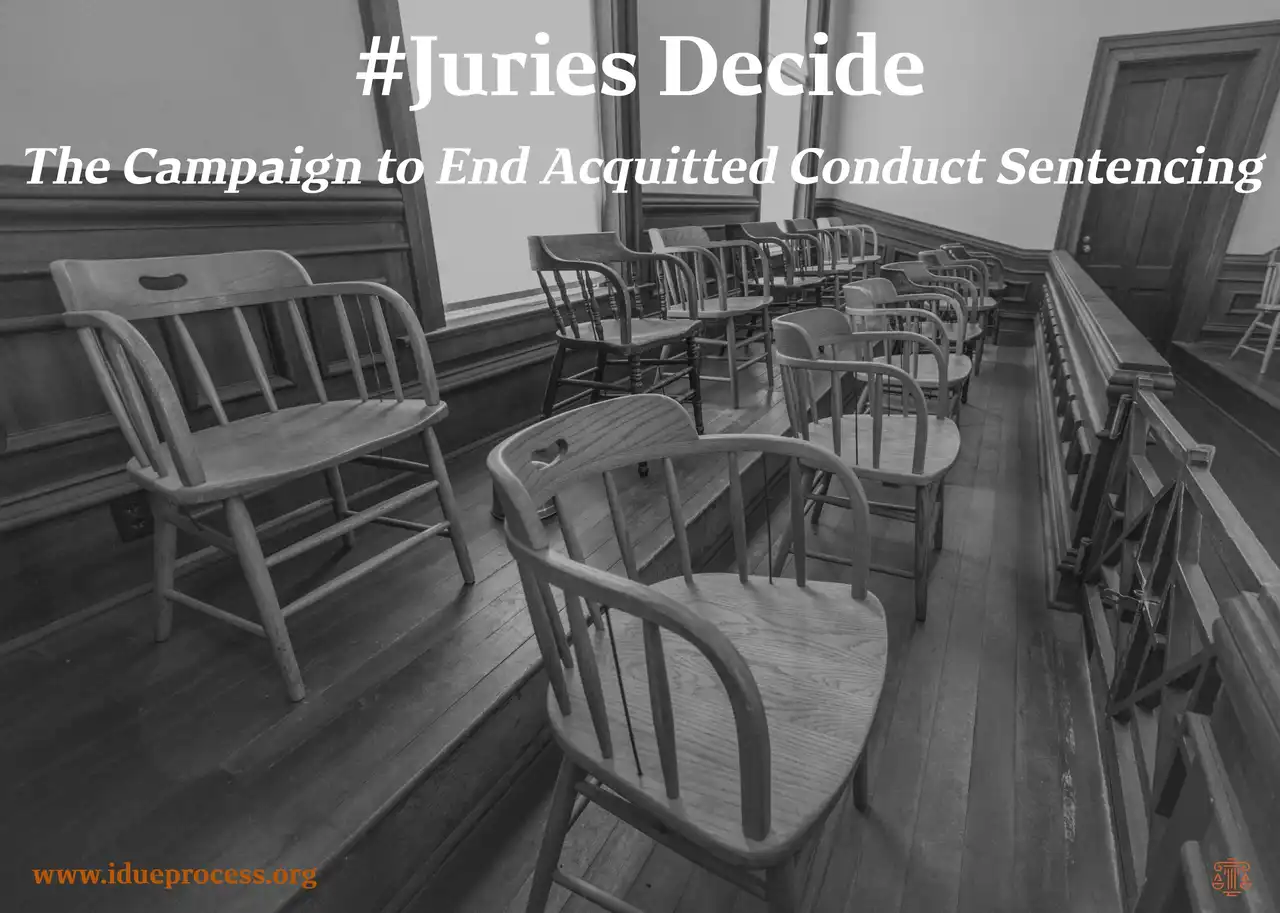
How is it that a jury can find a person accused of a crime “not guilty” but that same defendant can be sentenced for that crime anyway?
This is the problem of acquitted conduct sentencing–an unconstitutional practice Due Process Institute is working to abolish.
Learn more about our #JuriesDecide campaign.
Due Process Institute commended the United States Sentencing Commission (USSC) for unanimously promulgating an amendment today that prohibits the use of acquitted conduct when applying the Federal Sentencing Guidelines. This was undoubtedly a step in the right direction as acquitted conduct sentencing is a fundamentally unfair and unconstitutional practice that punishes defendants with lengthier sentences based on crimes they were never convicted of.
However, the USSC’s amendment still does not prevent the courts from increasing sentences based on acquitted conduct under 18 USC § 3661. We urge Congress to pass the Prohibiting Punishment of Acquitted Conduct Act in order to rectify the dissonance between the USSC’s amendment and the broad federal statute that still allows for acquitted conduct sentencing.